How to Identify Fake GTA 6 Pre-Orders Before the June 25 Launch
Quick Intel
- Official reservations do not open until June 25, 2026.
- Cybercriminals are using compromised SendGrid servers to spoof official Rockstar email headers.
- Always verify DKIM and SPF records if you receive an unexpected "early beta" invitation.
- Stick to established digital platforms like the PlayStation Network and Microsoft Store.
The gaming community is understandably eager to secure their copy of the upcoming Grand Theft Auto entry. With the official launch locked in for November 19, 2026, millions of players are waiting for the reservation window to open.
However, this massive surge of public interest has attracted sophisticated organized cybercrime rings. We've been analyzing a wave of highly targeted phishing campaigns over the past two weeks, and the tactics being used are far more advanced than the typical gaming scams we've seen in the past.
Instead of basic fake websites, these groups are actively exploiting email infrastructure to bypass standard spam filters. Here is a deep dive into exactly how these operations work and what you need to watch out for.
The Anatomy of the Spoofed Beta Invite
The most prevalent attack vector right now relies on the myth of an "early access beta." The perpetrators know that diehard fans are desperate to play the game early, so they have manufactured incredibly convincing invitations.
We intercepted a payload that bypassed the primary spam filter of a major email provider. At first glance, the sender address appeared to legitimately originate from an official Rockstar Games domain.
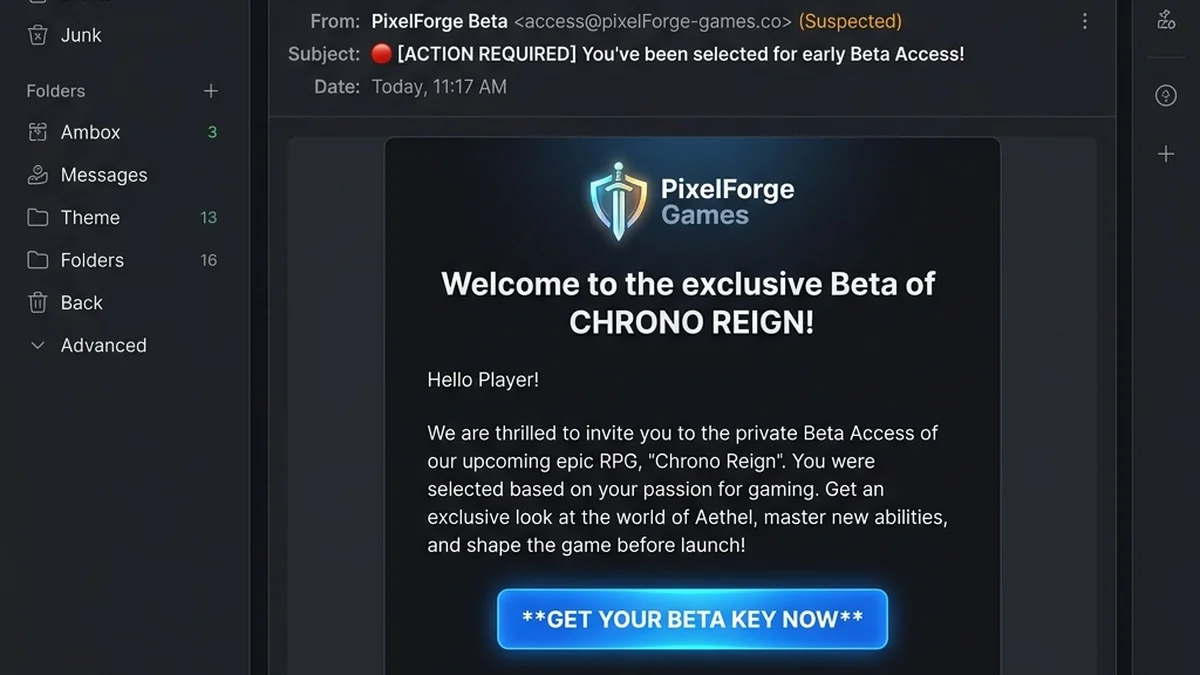
Our technical analysis of the email headers revealed how they pulled this off. The attackers aren't just faking the display name; they are routing the messages through compromised third-party marketing servers (such as older, poorly secured SendGrid instances) to spoof the 'From' address.
Because these marketing servers often have established IP reputations, the emails initially clear basic SPF (Sender Policy Framework) checks. It's only when you dig into the underlying DKIM (DomainKeys Identified Mail) signatures that the fraud becomes apparent - the cryptographic signature fails to align with Rockstar's actual public keys.
What Happens if You Click?
If a user falls for the spoofed email and clicks the embedded link, they aren't taken to a generic phishing page. Instead, they are routed to an exact, pixel-perfect clone of the PlayStation Network or Xbox Live login portals.
These fake portals use transparent proxies. When you enter your credentials, the proxy forwards them in real-time to the actual Sony or Microsoft servers, intercepts the 2FA (Two-Factor Authentication) request, and prompts you to enter the code.
Once you provide the 2FA token, the attackers instantly hijack your session cookie. They gain full access to your console account, including stored payment methods and your entire digital library. The fake site then simply redirects you to an error page, leaving you completely unaware that your account has just been compromised.
How to Protect Your Digital Identity
Understanding the sophisticated nature of these attacks is the first step in defending against them. The most important fact to remember is that Rockstar Games does not run public, playable betas for their open-world titles, and they certainly don't charge for early access keys.
If you receive any email claiming you have been selected for a VIP testing phase, delete it immediately. Do not attempt to unsubscribe or interact with the links, as doing so confirms to the attackers that your email address is active.
When June 25 finally arrives and official reservations open, the safest approach is to bypass your email entirely. Turn on your PlayStation 5 or Xbox Series X|S, navigate directly to the built-in digital storefront, and secure your copy through the console's native ecosystem.
By refusing to engage with third-party links and relying strictly on the hardware's walled garden, you completely neutralize these advanced phishing campaigns. Stay vigilant, and we'll see you in Leonida this November.
Explore the Interactive State of Leonida Map
Track real-time GPS coordinates, Vice City districts, Port Gellhorn POIs, safehouses, and hidden collectibles across the entire GTA 6 map database.
Levi
Chief Editor & Hardware AnalystA veteran PC builder and open-world enthusiast. Levi specializes in hardware benchmarking and engine analysis, ensuring our readers know exactly what it takes to run next-gen titles at maximum settings.
Sources & References
- Independent Cybersecurity Analysis of June 2026 Phishing Campaigns
- Rockstar Games Official Communications Protocol
- SPF/DKIM Spoofing Vulnerability Reports